They're the talk of the new music scene despite only recently getting signed to One Little Indian and as they release new single Deep Dive, James Allan caught up with Wild Palms to find out what's next for the boys
What has been the biggest creative obstacle you have had to face since becoming Wild Palms?
Jim: Nothing we’ve created,
Lou: No no no, it's just been alright, it’s been good.
Gareth: The only thing is, is leaving fucking equipment at gigs and then having to buy new stuff.
Lou: Money is our main obstacle, but nothing creative.
So, what do you write about? What inspires you to write? Do you have specific themes, or do you write for this entity of Wild Palms in a concentrated form now?
Lou: That.
James: Yeah?
Lou: Yeah. (Pause) You kind of stage by stage, end up getting into a new little pocket of sound that comes along. We end up kinda doing like, doing the song in that little era of about a month maybe or something, and they end up coming out sounding like that little pocket. Then you have a new kind of vibe that comes in and the other songs feed off that.
Darrell: It seems to be in twos as well. We will have two songs that are kinda, Brother and Sister, and then you will get onto the next chapter.
Does it still change the meanings of what you write about?
Lou: What, lyrically?
Yes
Lou: I used to do a lot of writing of full sets of lyrics or poetry, like in rhythm with my own rhythm, and then I would try to put it to their music, but now I do the opposite. I kinda wait until the whole things done musically and then feed off that and like sit back a bit and try and envisage, try and let something come to me that I think it should be about, rather than trying to impose something upon it.
Jim: Which is a very strange, not bad? Probably good way of working, but vey strange to write a song about a lyric or identity. (pause) Also he’s a musician now anyway (points at Lou)
Lou: I do a lot more music stuff now. (Pause) I kinda like it better like that anyway, and also I do the melodies first before rhythm or anything, then melody and rhythm, and once I got that I then do the lyrics. And I still got like a backlog of like stuff I want to write about, little sentences and stuff that form like, pages worth of ideas. Well I just wait, hold back.
Darrell: What it gives us is now is a pair of ears, which help, orchestrate the song.
Lou: We’ll a little step back. Not the same way, but it's kinda bouncing little ideas off each other, but I sometimes come up with the ideas for the first ideas of structuring, and then everyone goes, no, we're kinda going to do this to it. But to get the basis of something and then these lot (Jim: The editing panel) Lou: Yeah, and these are the editing panel. But it helps I think to have someone try and put a basic structure, even if its shit, because at least it’s a basic structure.
Jim: Sometimes its difficult to the outside of it, if you re making its bare bones you need someone at some point listening to it, like him, and going, 'okay, I can hear it from this', because I am way too,I cant even think about.
Lou: Because they have got too much to do.
Jim: I’m still trying to work out what I’m doing. So to, well be there and orchestrate it, definitely.
Lou: Yeah, but not in some sort of megalomaniac nuts way, its literally, I’m the only one who’s standing there at that time without doing anything to it, and so it’s easier for me.
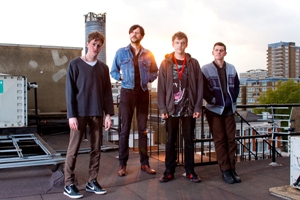
So you have a idea about how you write, do you have any sort of creative manifesto at all, or is that open to evolution in itself?
(Pause)
Jim: what does that mean?
Lou: No, Never. Keep it open.
You have mentioned in past interviews about the lack of time you have had for listening to your contemporaries and a lot of new music, does this mean that your absorption to modern music is finished? If so, where do you get your creative stream from?
Lou: No, we listen to new stuff, just, not a lot of it. We listen to new stuff, but really, kinda handpick it. We listen to new music; it’s just like when people compare us to stuff that is really prevalent in popular music at the moment. Not pop music, but popular music. Stuff that’s doing well in alternative. It’s like what we do falls on deaf ears a bit, when you hear the comparisons made. But we do listen to new music; just I don’t think it’s the new music that everyone else listens to.
Darrell: When we listen to it, a lot of the time it is in the car.
Jim: Yeah, music hour in the car.
Lou: Yeah, on tour that’s a nice thing we all give music to each other, and all of a sudden you like, hear stuff and,.
Jim: Who did we play?
Lou: Nathan Fake
Jim: That was kinda a big influence, because it’s kinda unobtainable for us to ever want to translate it, just like that low fi electro thing he (Lou) was listening to.
Darrell: Where were we listening to it?
Jim: Well it is on the tape, the film of the tour.
Lou: It’s on the video of the tour. You just aint seen it.
Lou: Anyway. (pause) That stuff!
Darryl: And err? What’s it? Jay Z. I like that.
You’re going in a hip-hop direction?
Jim: Jay Z is the one thing that. The production. That is defiantly something that I would like to. (Pause) That I will try and get into there somehow, I just love it, can’t avoid it, and can’t try not to do that because I just fucking love it. It’s really good, just for the drum patterns alone, and the sound of them. It’s amazing.
Where did you influences come from outside of music? Because you have your (Darrell) art. Which is a big thing.
Lou: Just, Gaz, James, Darrell, and Lou. It’s about the biggest influences there are in that room. Because everything kinda is filtered through individuals anyway. In all honesty, we spend so much time together in that studio, that there’s not much outside of that, you know? Fuckin' social life and what else at the moment. You know, everything influences you as a person, don’t it? Its just then, what you choose to pick out and what you choose to do. It can come from anywhere.
You say that you have a democratic way of working. So, going back to your comments about the 'editing panel' The four of you, with that equal share, do you bring anything different to the table during writing, or is it completely off the shoe every time?
Jim: Yeah, I’m normally the first to complain, about how something is going, and then Gaz will quietly go, (makes moaning sound)
Gareth: You can tell with me because I just stand there and go 'hmmmmm?'. That is it.
Jim: Our method of writing I think is fault proof for us, like it works, its something we all get, and the more we do it, the easier it is to say it. To go 'I like this, but'
Gareth: We have got a lot better at that.
Lou: We don’t argue anymore.
Jim: No, because we all know it’s for a greater good, and we gotta be good, hopefully for a lot of years. It’s much bigger than an argument worth having.
Darrell: We have settled down quite a bit, we know what we are doing.
Lou: We can all sort of, when someone says, 'can you play that there?' 'Can you strip that down?' You know, whatever, and it just kinda works like that. It’s a nice place to be in.
Gareth: Where you trust each other.
Lou: Yeah, when someone says 'can you do that?' You do it without thinking 'Is he having a go at me?' its all good.
Lou, you have picked up lots of instruments, little bits on the side. Where did that come from?
Lou: I get bored, quick.
Yeah?
Lou: I just like picking stuff up and not knowing how to play it and getting by. The thing is, all the stuff I play isn’t mine. Like none of its mine, its stuff that,
Jim: You had to buy the keyboard.
Lou: Yeah eventually, because I lost the other one. Anyway, it’s basically, If people leave things knocking about, or they’ve stopped playing music, I go 'Oh can I have that?' And then just kinda try and incorporate it into the sound. So the only reason my sound has developed in a way is just sheer luck. What people leave about, and just kind of pick it up.
Is there any more room for you picking up further instruments at all in the band?
Lou: I would like to get rid of the pads and let Jim have them.
Jim: He won’t need them after the first album.
Lou: So what we will try and do is incorporate a live kit a live kit and an electric kit together round Jim and then possibly,.
Darrell: Just lower him in.
Lou: Haha, yeah just lower him in. Then I’d kinda like to try, well,Something else, I don’t know? We’ve talked about getting samplers, we are thinking about working a lot more digitally than we currently are. As we will have to next year, because being on tour a lot of it will have to be through computers.
Jim: And we are missing out on so much that isn’t possible without.
Lou: We have done as much; well we’ve done a lot with what we have got at our disposal, like in a sonic way. Now it’s trying to like, get to grips with the actual technology.
So essentially, you are saying that you are going to write and record the album. Then go and figure out how to play it?
Lou: Exactly, but that’s going to be fun
Jim: Well this is what our producer was saying. Gareth Jones, the guy who’s producing the album, he said 'look, don’t worry about how you're gonna do it all, we’ll sort that out. Just worry about making an album that sounds great.'
Lou: So were just going to do whatever we do on the album, and then try and get...
Jim: Saying that, I think the keyboard will be a mainstay. I think there’s going to be some piano on the album, which I’m really looking forward to.
No one is going to pick up a violin?
Darrell: I was hitting a drum for a while.
Jim: What about that thing at your flat?
Darrell: Oh, I got a Thai thing that makes this weird noise.
Jim: Okay, so a 'Thai thing' right?
Lou: Whatever that is?
Darrell: I’d like to play bass, a double bass.
Jim: Wow! Two bass guitars?
Darrell: I’d love to see that.
Lou: We’ll see.
Had you not signed to One Little Indian, would you have gone and recorded your album anyway?
Lou: No. We got no money. Still don’t have any money now, because we spent it all on the album. Its like, my dad is going on to me 'like yeah, so you got your advance and all that?' 'yeah yeah, we spent it all on the producer we want.' So he went, 'so what? All of it?' He didn’t understand it. But you kinda got to suffer for your art I guess?
If that is what you want to do?
Darrell: Well you want to make a great sounding album don’t you? So you don’t want to spend like, £500 on the producer.
Lou: And even if the album plummets like a lead balloon, at least we know that we have done everything within our power to make it the best album we could make. So that’s what you gotta do. You gotta give yourself a fighting chance.
So apart from being able to record the album, what changes has signing to one little Indian brought to the band?
Lou: All it is right, is, you know, that you got support financially and creatively, and you’ve got a vehicle within from which you can release music for three albums now. That’s a beautiful thing to have, to know you have longevity within that. So that’s the best thing, that you are now, actually a musician.
Does having that security, help creatively?
Lou: I think so, maybe?
Gareth: Maybe it takes a little of the pressure off.
Lou: Its chilled us out a little bit I think.
Jim: Yeah, you do feel like you have got over a hurdle.
Gareth: Definitely.
Lou: And also because you know, you are now writing for an album. This album that you could hypothetically make when you are not signed. It’s not that any more, it’s coming, and you got to work for that. So in that sense you have a time plan now. You got fixed dates, you got stuff to do, points to look forward to, and that’s nice isn’t it. Your not just floating about in the ether trying to grab hold of every little bit you can.
Darrell: Exactly. (Pause) And I feel more comfortable with the sacrifices that you make generally, as it makes it all a lot easier. You have the right to really throw yourself into it, because you have that opportunity.
You keep developing sound wise; I hear tracks tonight that all of a sudden you have changed round. Do you now find it hard to write for that concise target of an album, when you are constantly evolving through the process? Do you see yourself being halfway through the mastering process and start ripping the tracks to shreds?
Lou: I think that would happen anyway.
Jim: That’s always going to happen.
Lou: Our major worry was, well, is and always will be, that by the time the album comes out we will be a different band again, because we kick on quite quickly. But either way you gotta just look at it as one article, a document of what it is that you have done.
Jim: And most people don’t hear that it’s a five, six month old record. For them it’s as fresh as anything because they won’t have heard it yet. Its cool, but we are constantly trying to find new ways to work, but at the same time it’s something you don’t want to document. Put it like this, If we had recorded the album six month ago, id be having fucking kittens. Because I would be like 'oh shit', we are so, so much better than that. I think now I would be happy to say, 'That was us.'
Darrell: It’s still really skin of the teeth still. Still early. But you could keep putting it off for ages.
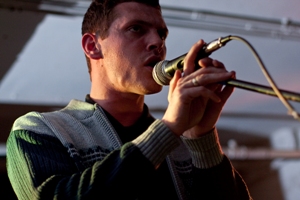
Did the same thinking come in when you released 'Overtime'? Because obviously it was an old song, and it didn’t sound like the new material, which meant everyone was going to coin you with this, that and whatever.
Lou: (Groans), Yep, it’s gone. (Pause) It’s been like, even at the time we literally farted that out in about forty minutes in this dead end studio. It was just a catchy little thing. And I think it’s the only song we had that was under four minutes. So its like, 'probably should release that one.'
Jim: It’s a good debut single.
Gareth: I like it.
Darrell: I wouldn’t mind playing it now.
Lou: I don’t like my vocals on it. That’s the only thing.
Darrell: Lyrically, you’ll be singing that forever. 'That' subject matter.
Lou: Yeah that subject matter I wanna just lay to rest and move on man, I’m all about
optimism, lets get out of here!
So you were saying its one of the few things that you had that was under four minutes. Do you find it hard writing in the pop sense?
Jim: Not hard, we just don’t. (Laughs) We don’t make a conscious effort to make anything shorter or longer. We just write that way. In my old band we used to write songs that two and half minutes long all the time. They would seem really expansive, but they would be two and a half minutes long. With this group, I dunno? I suppose there’s more to say.
Lou: We’ve written two songs that are under three and a half minutes.
Gareth: What?
Lou: Delight in Temptation, three fifteen! But with these things the song just dictates itself. It will be whatever it's gotta be. So we don’t put pressure upon ourselves to achieve that.
The next single 'Deep Dive' is out soon, what was shooting the video like?
Jim: I had a good laugh. Going back to the place that we grew up in, great.
Darrell: It was funny when Lou got left in the bath for like an hour,. We all went to breakfast and forgot to tell him.
Lou: They were going on 'Is the bath ready? Is the bath ready?', 'Yeah' and its major hot right. So he’s like 'We gotta do it now'. So, got in there, and then it took them like 20 minutes to do this shot up the stairs that panned round. The camera man fell over like three times, got massively angry. And just as we are about to do the other one, all these bacon sandwiches come in. And they were like 'No, we’ll eat them later'. They didn’t. They sat down there and ate them. And when they came back up I was in this bath, it was stone cold. If you look on the film my fingers are like fucking, wet sausages. Pruned out, horrible. That was the bad thing; I got over it afterwards though.
Darrell: The day all in all was really good, we just ran about.
Did you have much creative input to the video?
Lou: It was my idea.
Well that answers that one then!
Lou: What we wanted to do was supposed to be like an optimistic song. It’s supposed to celebrate achieving something. Like working hard for goals and aims, putting yourself in positions where you can seize opportunity. And we have all done that from our area. I wanted to show that, and it’s also to show that we not pretentious wankers. Were from where we are from, and we try and make the best music we can possibly make, and that’s about it.
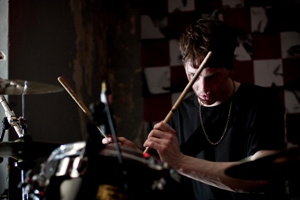
What are your plans for the rest of 2010? Are you playing any festivals?
Jim: We are doing what we can.
Lou: As many as we get.
Jim: We’re going to Somerset, Canterbury, I can’t wait. I've never seen those places.
Lou: Somerset, Canterbury, Winhurst, Taplow, Didcot. All of them. No seriously, it
would be lovely to get a little string of them together.
Gareth: We are playing in Holland.
Lou: Yeah that’s nice. It will be good.
Have you changed the way you feel about playing live? Because, as a band that has grown up in the practice room, or the studio, in places where you get everything right, before you walk out.
Lou: Yeah, in about the last week. Basically, we kept within our set, we kept changing it. We kept adding stuff in. In the end, we ended up doing ourselves a little disservice and it was detrimental to the set. So in the last week and a half we have been working on interludes between songs and just keeping it flowing as much as we can from song to song. Because in all fairness, people have short attention spans, and if you give them a gap to talk, they will talk. We have tried working on being a little more fluent.
Darrell: I do find it, (Playing) quite nerve-wracking in a way, just because in that studio, it’s so comfortable, and to suddenly come out and there’s lights going, and people everywhere. You almost kind of forget about that.
Lou: It is another part of the job that sometimes I don’t think even links up. You know when your in the studio, and its like, 'Oh yeah, and then you have to do that live bit as well.' I think that’s the bit we kinda fell short on.
You talk about nerves. Do you ever get scared about how the songs will be perceived in a live domain, when they were not conceived in that way?
Lou: We’ve got Eduardo, our soundman, and he has worked with us for a while, and he gets it, he knows what it’s all about.
Jim: I dunno? There’s a song in the set tonight that needs attention to survive. I mean you couldn’t play it in a pub. It would translate at all.
Lou: We struggle now at any point, without a really good sound. It just doesn’t go hand in hand with what we do.
Darrell: With a couple of them, with the vulnerability of them, you need good sound to really get the mood across.
Lou: That’s the worse thing about playing live. You will never hear yourself. You will never ever hear what they hear in the crowd. Like never, deal with it, but it’s really frustrating.
You have mentioned playing aboard again, and I know you have done so in the past. Is there anything different about playing in other countries?
Gareth: I don’t know, we haven’t really done that much
Jim: I’ve done it a bit, and I always think the crowd are much better in Italy.
Lou: Ahh, we had some shockers in Italy man.
Jim: I’m talking like, major cities. Like Milan or Rome.
Lou: We played some good ones in Italy, but we also played some fucking nuts ones in barns and stuff. Because we went over too early. And we would be playing, and there’s some people just looking at us like 'What the fuck are you doing here?'
Jim: That’s almost a right of passage though. You would find out that whoever was playing there last month, and it’s like 'wow'. It’s what you got to do.
Lou: the thing we’ve always noticed though is that even when we are playing to like almost no one, aboard, or wherever. Every time you think 'Wow, they are going to hate us.' And you get like, a semi bad reception, or really fucking bad ones, there will always be someone who is like 'I’m so glad that I saw you play tonight', and it really does make it worth it. Honestly, it really does. Like every time.
Album Artwork, is Darrell responsible?
Darrell: Err, no. No, I’m not. Because the more it goes on, the music becomes more encompassing, and I really didn’t feel that my art, my aesthetic, was necessarily representative of what is going on with the music. It’s also a bit too much of me. We have a few friends who are Brighton graduates, and they said they wanted to do it. He really wanted to design album cover as art. And we really loved his stuff.
Lou: This Neil Calcy guy, he’s ended up being in a way, our Artistic Director. He oversees a lot of the stuff. Like you said, before we got signed, all the crap that we got floating about, that was kinda extraneous from the music was becoming a little bit too much. And so now we just want to be able to go back to the music. We still have a say over everything, it’s just nice to have someone on your side, who knows what you are about, and what you want to do.
Jim: Yet again it’s another person who can look from outside a bit. Sometimes you are so involved, you can’t actually look t what it is. Plus he’s really good, I trust him.
Have you started thinking beyond this album?
Jim: Yes.
Lou: Noooo.
Jim: What do you mean? Okay, from where I’m coming from, when we have a bit more money, a bit more time I would definitely like to work with loops, and samples. It makes the spectrum so much bigger, there is so much more you can do. But beyond that, no. Musically there have been no decisions.
Lou: I don’t think we will ever do that. Things just drip feed there way into what we do, rather that say 'that’s it, we will just fucking smash our way into a whole different thing.' I don’t think we would do reinventing too well. I don’t know?
Jim: But the first time we get into a rehearsal with a sample and loop it might go,
Lou: Yeah it might go nuts.
Darrell: We are just going to concentrate on the record, as we don’t even know what that is yet. We don’t know how that’s going to grow.
Do you get anything that makes you think 'We should leave that alone for the moment; we will come back to that some other time.'?
Lou We will try it
Jim: Anything’s welcome. The good thing about putting all our money on a producer is that he is going to put his view on it, and he has a very good mind for it. He hears things that you won’t necessarily hear. Which is the point of a good producer. So you can’t leave anything out, just because to you it might not work. Anything really, just not,.
Lou: Funk. Because in all fairness we could’ve been a funk band.
Jim: I don’t think you should be saying this.
Lou: I couldn’t give a shit. There is like, some funkiness inside of us that is just like 'Keep that under wraps' That’s it!
Darrell: Just trying to think of the things I’ve done, some of the weird stuff I’ve come out with.
Lou: Nah, lost count.
Darrell: Maybe like, rock blues?
Lou: Yeah he can get like, BB King on your ass or like Cream or something.
Gareth: Cream on your ass?
Lou: I think we hit a low point.