For audiences, a concert begins when the lights go down. For the people responsible for getting an artist onto that stage, the work starts days, weeks and sometimes months earlier.
Touring has become one of the most complicated parts of the modern music business. Artists can move between clubs, theaters, concert halls and major festivals within the same run, often crossing borders and working with different promoters, production teams and venues every night. Somewhere in the middle of that operation is the tour manager, tasked with making sure the moving pieces come together while allowing the artist to concentrate on performing.
It is a side of the industry Tobi Blackman has come to know from several perspectives.
Blackman began working in music in 2009, initially as a national concert promoter. He later moved into booking, becoming an agent before adding tour management to his career in 2021. That progression has given him experience on three sides of the live business that frequently have to work together but do not always see a tour through the same lens.
For Blackman, that background means understanding not only what happens on the road, but what goes into putting an artist there in the first place. A promoter thinks about the viability of a show and the local market. An agent considers routing, offers and opportunities. A tour manager has to take what exists on paper and make it function in the real world.
That combination has become particularly relevant as Blackman has worked with artists whose touring operations have expanded considerably.
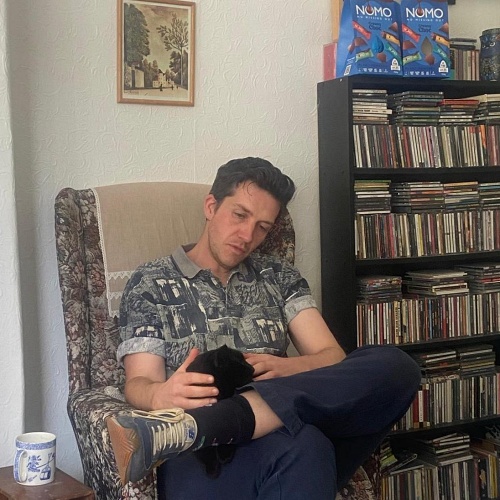
He began working with Japanese singer-songwriter Ichiko Aoba in 2022, when her European performances included venues with capacities around 200. Since then, the scale of the touring has changed dramatically. More recent schedules have included Glastonbury Festival, the Netherlands’ Down The Rabbit Hole and a run through prominent European concert halls, including London’s Royal Albert Hall.
It is the type of progression that illustrates how touring infrastructure has to evolve alongside an artist. A small club show and a Royal Albert Hall performance may both involve an artist walking onstage to play music, but almost everything surrounding those performances can operate on a different scale.
Blackman has also worked with Liana Flores on dates including Hammersmith Apollo and Royal Albert Hall, while other touring credits have placed him alongside artists with very different histories and audiences.
When The Moldy Peaches reunited for European dates, Blackman managed a tour that included London’s Roundhouse and Primavera Festival. His résumé has also included work with Kristin Hersh and Throwing Muses, The Residents, Kimya Dawson and Adam Green.
Green, the singer-songwriter and Moldy Peaches co-founder, describes the value of a strong tour manager in terms that go beyond schedules and logistics.
“Tobi is the ultimate tour manager — super-responsible, sensitive to the needs of musicians, and a joy to travel with,” Green says. “He’s got really great taste and intelligence, and I’ve always been proud to have him represent my band on the road.”
That sensitivity can be easy to overlook from outside the touring world. Touring is repetitive by nature — travel, load-in, soundcheck, performance and another journey — but the people involved are not machines. Artists still have birthdays, difficult days and lives taking place around the nightly schedule.
Harpist Mary Lattimore recalls one moment that demonstrated Blackman’s more personal approach. “Tobi is not only wonderfully organized, but truly cares about the music and the artist and has become a great friend of mine,” she says.
“On my birthday, he organized a trip to see my favorite animal, the capybara, before soundcheck! Tobi brings the magic!”
The story is lighthearted, but it speaks to an important part of touring that rarely appears on a production sheet: maintaining an environment in which musicians can continue doing their best work during long stretches away from home.
Blackman’s relationship with Oklahoma City band Chat Pile provides another example of how that role can develop alongside an act. He has worked with the group since its first European trip in 2022, helping manage its touring activity and relationships with booking agents and festivals, including Spain’s Primavera.
For a band entering international markets, those relationships matter. Touring overseas introduces new venues, promoters, festivals, transportation demands and working practices. A tour manager familiar with both the booking and promotional sides of the business can serve as a bridge between the creative priorities of the musicians and the practical requirements surrounding them.
Kristin Hersh, whose career with Throwing Muses stretches back more than four decades, puts Blackman’s work in particularly strong terms.
“I’ve worked with top-tier individuals in this industry for over 4 decades and Tobi is the most professional, the most industrious, the most driven, and the most effective, by far,” Hersh says.
Those comments point toward a part of the music industry that audiences rarely witness. Successful touring depends on far more people than those standing under the stage lights. Agents secure opportunities, promoters build shows, production crews make them possible and tour managers connect much of that work from one city to the next.
Blackman’s career happens to cross several of those worlds.
After beginning as a promoter, moving into booking and eventually taking responsibility for tours themselves, he has watched the live industry from the venue office, the agency perspective and the road. More than fifteen years after entering the business, his work reflects how increasingly interconnected those roles have become.
The audience may only see the final two hours.
For Blackman and the people working behind the artists they hear, those two hours are the result of everything that happened before the doors opened.