For as long as I can remember, my life has been defined by the pursuit of sonic purity. But like many of us who spent our best years in cramped basement clubs, leaning against arena stacks, or standing in high-decibel rehearsal rooms, that passion came with a hidden cost. Eventually, the high-frequency clarity started to erode, replaced by the persistent, high-pitched ringing of tinnitus. It’s a common story for music lovers: as nerve damage creates "silent" frequencies, the brain tries to compensate by turning up its internal gain, leaving many of us, myself included, with a high-pitched ringing that never quite leaves.

I recently discovered that modern audiology has finally caught up with our specific needs. A well-calibrated hearing aid does more than just make things louder; it provides the neurological stimulation the brain is starving for. By reintroducing those lost frequencies, a good device can effectively "mask" that internal noise, offering welcome relief from the cognitive drain of constant ringing.
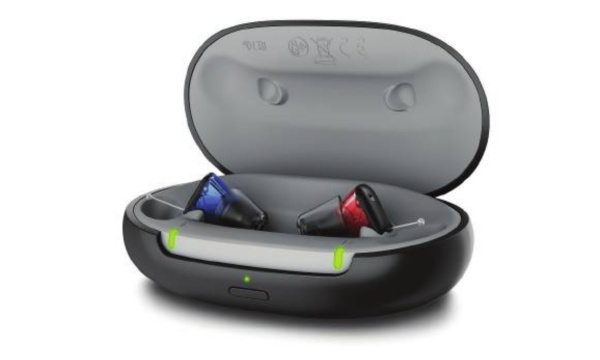
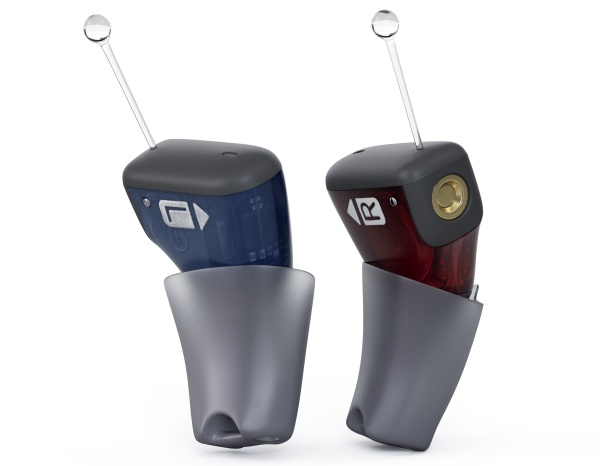
My journey to find a solution led me to Specsavers. The process started with a comprehensive diagnostic appointment—not just a quick screening, but a full audiogram to map the specific contours of my hearing loss. I was supported throughout by a very understanding hearing expert, who patiently led me through all the available options to ensure I found the right fit for my needs. For those of us who want performance without the bulk, the Advance IF CIC LI 81 is their "Elite" tier option. It’s an Instant Fit (IF), Completely-in-Canal (CIC) device. Having previously tried custom-moulded versions, I found this instant-fit model significantly more comfortable and far less intrusive, especially when eating. Plus, it’s a rechargeable lithium-ion unit, which is a game-changer.
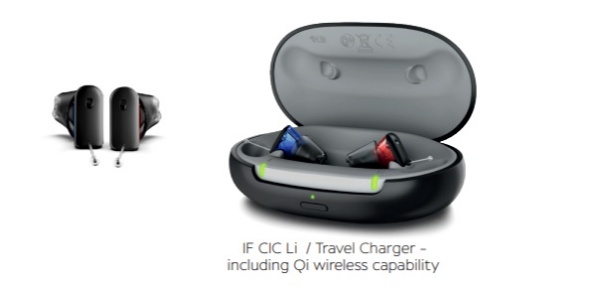
The setup was remarkably streamlined. Once my high-frequency deficiencies were mapped, the hearing expert programmed the 81s specifically for my ears. The technology is impressive—using 48 channels to separate background noise from speech. But for me, the "Music Enhancer" program is the real winner. It utilizes an extended bandwidth up to 10 kHz, ensuring the music actually sounds like music, rather than the "tinny" or artificial quality you might expect from basic amplification.
Living with them is effortless because the experience is largely automated. Built-in sensors detect if I’m sitting in a reverberant hall or walking through a windy park, adjusting the microphones and noise reduction protocols without me touching a thing. If I do want to tweak something, I just use the myRemote app on my phone, which acts as a discreet remote control.
What really sold me was the four-year aftercare package, covering annual re-tests and fine-tuning. The team was very efficient, and the whole process was very smooth, which made all the difference. It takes a few weeks for the brain to acclimatize to hearing these sounds again, so having that professional oversight is vital. Between the elite-level processing and the freedom from traditional tiny batteries, this has been a pragmatic and life-changing path back to the music. It is a product I would fully recommend.
If you’re also curious about your hearing, details on booking an appointment can be found
here.
Get more info on the product by scanning the QR code below.